
Due to the US Government shutdown, the Smithsonian is temporarily closed. The Global Volcanism Program website will remain available but will not be monitored or updated. Status updates will be available on the Smithsonian homepage.
Logo link to homepage

Image GVP-04197

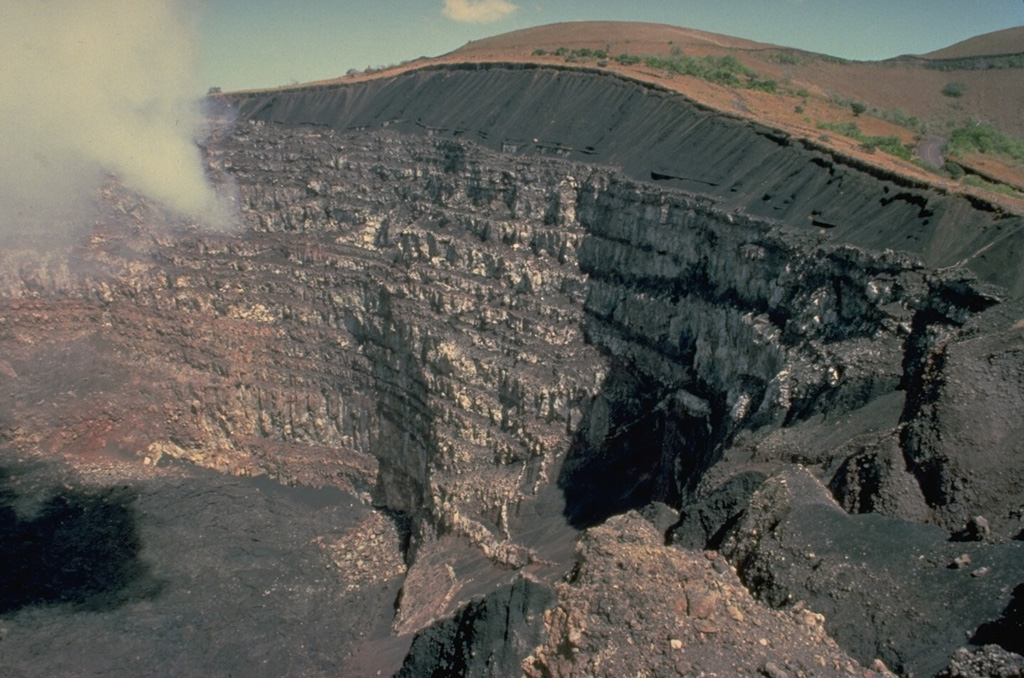
A thick stack of about 20 lava flows is exposed in the 230-m-high eastern walls of Santiago crater, overlain by a sequence of black basaltic ash deposits.  The 600-m-wide Santiago crater is seen here from a viewpoint on the SW crater rim.  Santiago crater is located on the west side of the post-caldera cone of Nindirí, and has been the source of most historical eruptions of Masaya. Copyrighted photo by Katia and Maurice Krafft, 1983.

A thick stack of about 20 lava flows is exposed in the 230-m-high eastern walls of Santiago crater, overlain by a sequence of black basaltic ash deposits. The 600-m-wide Santiago crater is seen here from a viewpoint on the SW crater rim. Santiago crater is located on the west side of the post-caldera cone of Nindirí, and has been the source of most historical eruptions of Masaya.

Copyrighted photo by Katia and Maurice Krafft, 1983.

Copyrighted image used with permission. All Rights Reserved. Contact photographer for any usage requests.

Masaya