

Image GVP-11698
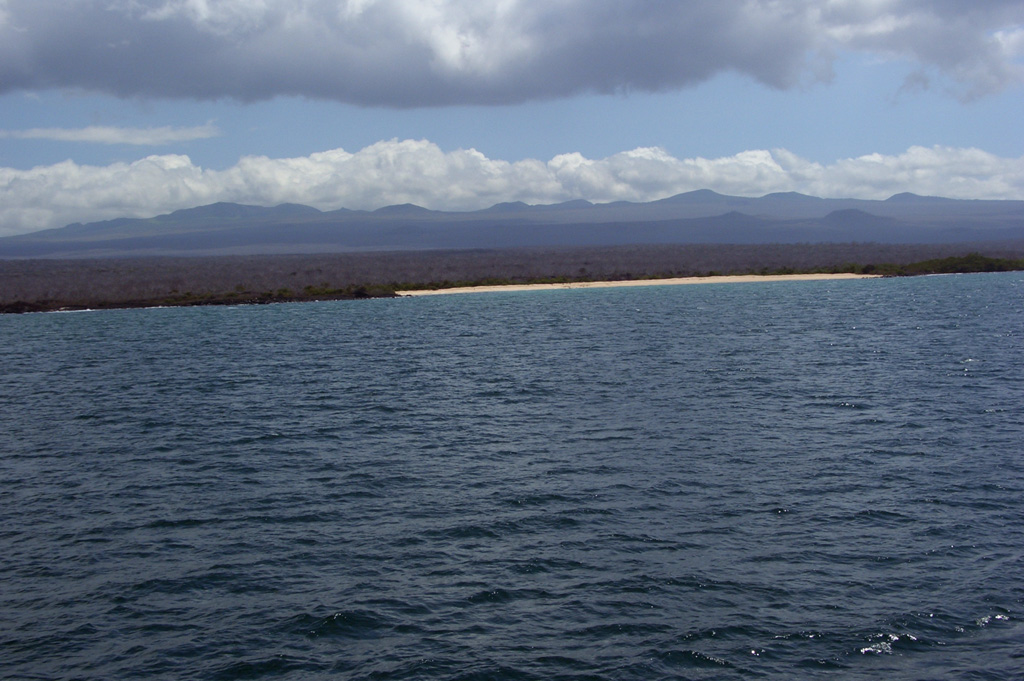
The broad shield volcano forming Santa Cruz Island is seen from its northern coast. The oval-shaped, 32 x 40 km wide island is capped by cinder cones with well-preserved craters that largely bury a shallow summit caldera. The highland scoria cones are grouped along an E-W belt parallel to recent fault scarps that border Academy Bay, location of the Charles Darwin Research Station.
Photo by Lee Siebert, 2006 (Smithsonian Institution).
 This image is made available under the Public Domain Dedication CC0 license, but proper attribution is appreciated.
Santa Cruz
