

Report on Aira (Japan) — 3 December-9 December 2025
Smithsonian Institution / US Geological Survey
Weekly Volcanic Activity Report, 3 December-9 December 2025
Managing Editor: Sally Sennert.
Please cite this report as:
Global Volcanism Program, 2025. Report on Aira (Japan) (Sennert, S, ed.). Weekly Volcanic Activity Report, 3 December-9 December 2025. Smithsonian Institution and US Geological Survey.
Aira
Japan
31.5772°N, 130.6589°E; summit elev. 1117 m
All times are local (unless otherwise noted)
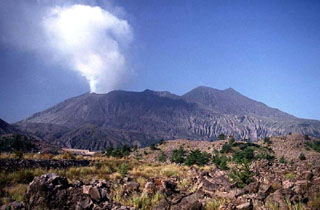
The Japan Meteorological Agency (JMA) reported ongoing eruptive activity at Minamidake Crater (Aira Caldera’s Sakurajima volcano) during 2-8 December with 11 eruptive events and nine explosions. Ash plumes rose as high as 2.2 km above the crater rim and large blocks were ejected as far as 700 m from the vent. Nightly crater incandescence was visible in webcam images. Sulfur dioxide emissions were characterized as high, averaging 2,300 tons per day on 5 December. Daily eruptive events produced ash plumes that rose 1-2.2 km above the crater rim and drifted NE and SE. Explosions at 1107, at 2046, at 2212, and at 2338 on 4 December, at 0654 and at 2229 on 5 December, at 0213 on 6 December, and at 2053 and at 184 on 8 December generated ash plumes that rose 600-1,700 m above the crater rim and drifted E and SE. The Alert Level remained at 3 (on a 5-level scale), and the public was warned to be cautious within 2 km of both the Minimadake and Showa craters.
Geological Summary. The Aira caldera in the northern half of Kagoshima Bay contains the post-caldera Sakurajima volcano, one of Japan's most active. Eruption of the voluminous Ito pyroclastic flow accompanied formation of the 17 x 23 km caldera about 22,000 years ago. The smaller Wakamiko caldera was formed during the early Holocene in the NE corner of the caldera, along with several post-caldera cones. The construction of Sakurajima began about 13,000 years ago on the southern rim and built an island that was joined to the Osumi Peninsula during the major explosive and effusive eruption of 1914. Activity at the Kitadake summit cone ended about 4,850 years ago, after which eruptions took place at Minamidake. Frequent eruptions since the 8th century have deposited ash on the city of Kagoshima, located across Kagoshima Bay only 8 km from the summit. The largest recorded eruption took place during 1471-76.
