
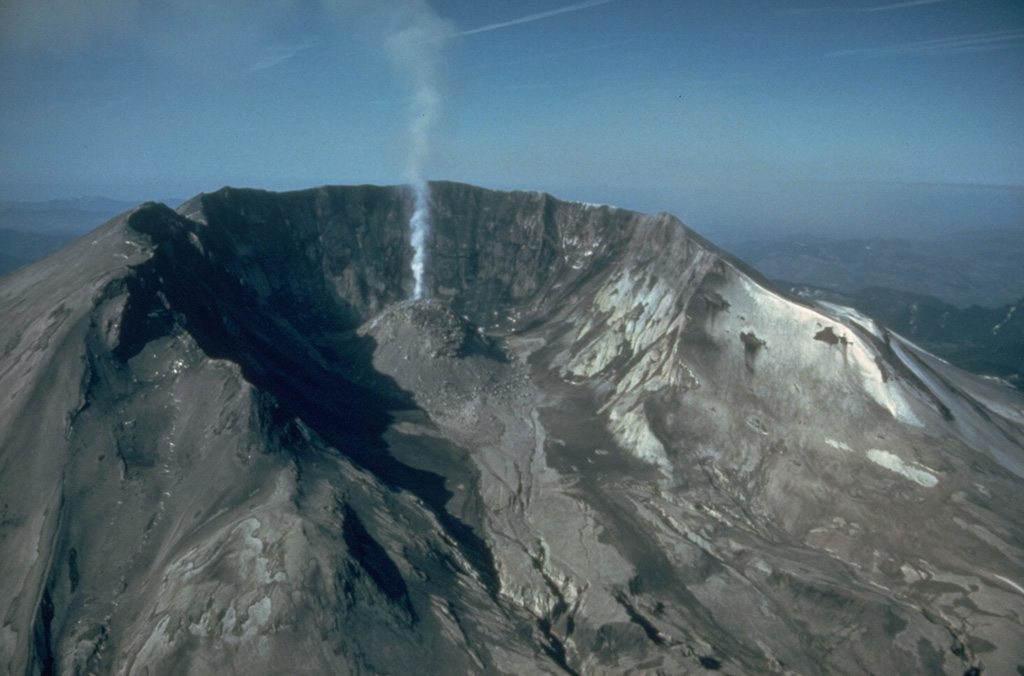
The large, horseshoe-shaped crater left by the collapse of Mount St. Helens on 18 May 1980, is typical of scarps created by massive volcanic landslides. The collapse removed nearly 1 km of the summit, leaving a 2 x 3.5 km crater open to the north. This June 1982 view shows a lava dome that began growing within the new crater.
Photo by Steve Brantley, 1982 (U.S. Geological Survey).
 This image is made available as a Public Domain Work, but proper attribution is appreciated.
Galleries: Lava Domes | Craters
Keywords: lava dome | collapse scarp | crater | plume | degassing


 St. Helens