

Image GVP-03557
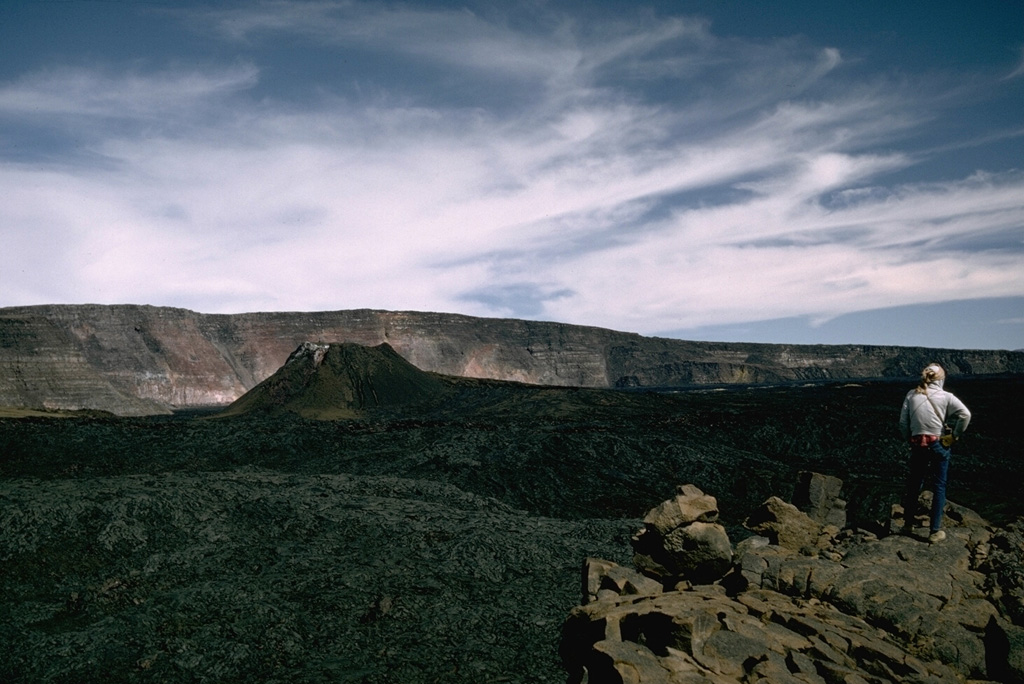
The spatter cone that formed during the 1940 eruption of Mauna Loa is seen in Moku'aweoweo caldera in this 1966 view from the southern rim of the caldera with the western caldera wall in the background. The eruption began along a 6-km-long fissure that extended across the caldera and down the SW rift zone. Activity soon became focused within the caldera and lava flows covered two-thirds of the caldera floor.
Photo by Richard Fiske, 1966 (Smithsonian Institution).
 This image is made available under the Public Domain Dedication CC0 license, but proper attribution is appreciated.
Galleries: Calderas
Keywords: spatter cone | caldera | lava flow | volcanologist | field work | pahoehoe
Mauna Loa
