

Report on Karangetang (Indonesia) — 8 March-14 March 2023
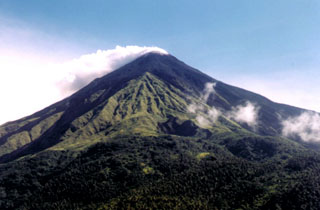
Smithsonian Institution / US Geological Survey
Weekly Volcanic Activity Report, 8 March-14 March 2023
Managing Editor: Sally Sennert.
Please cite this report as:
Global Volcanism Program, 2023. Report on Karangetang (Indonesia) (Sennert, S, ed.). Weekly Volcanic Activity Report, 8 March-14 March 2023. Smithsonian Institution and US Geological Survey.
Karangetang
Indonesia
2.781°N, 125.407°E; summit elev. 1797 m
All times are local (unless otherwise noted)
Webcam images of Karangetang posted in PVMBG daily reports showed very minor incandescence at the summit Main Crater (S crater) during 8-14 March. Short, dimly incandescent trails on images from 8 and 10 March were possibly from avalanches. According to the Darwin VAAC at 1710 on 9 March an ash plume rose to 2.4 km (8,000 ft) a.s.l. and drifted S. A large thermal anomaly was visible in images from 0550 and 0930 on 10 March. The Alert Level remained at 3 (on a scale of 1-4) and the public were advised to stay 2.5 km away from Main Crater with an extension to 3.5 km on the S and SE flanks.
Geological Summary. Karangetang (Api Siau) volcano lies at the northern end of the island of Siau, about 125 km NNE of the NE-most point of Sulawesi. The stratovolcano contains five summit craters along a N-S line. It is one of Indonesia's most active volcanoes, with more than 40 eruptions recorded since 1675 and many additional small eruptions that were not documented (Neumann van Padang, 1951). Twentieth-century eruptions have included frequent explosive activity sometimes accompanied by pyroclastic flows and lahars. Lava dome growth has occurred in the summit craters; collapse of lava flow fronts have produced pyroclastic flows.
Sources: Pusat Vulkanologi dan Mitigasi Bencana Geologi (PVMBG, also known as CVGHM), Darwin Volcanic Ash Advisory Centre (VAAC)
