

Global Volcanism Program | Image GVP-03664
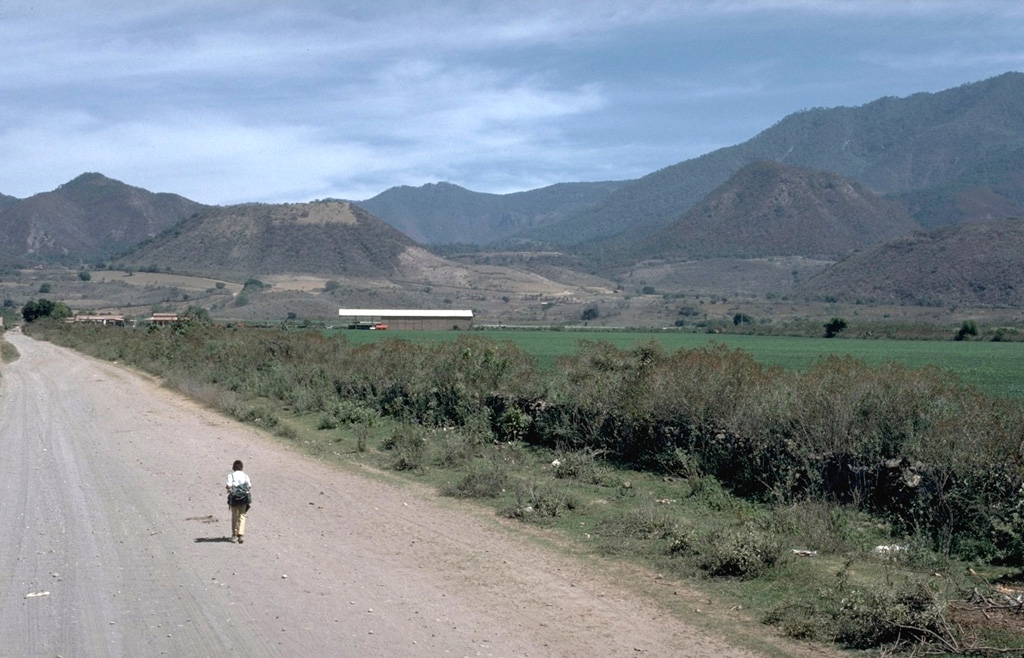
The summit ridge of flat-topped Volcán Molcajete (left) is at the level of the horizon in this view from the SW. Molcajete, referring to stone bowls used for grinding grains, is a common name applied to scoria cones with well-preserved craters. Volcán El Tecomate is the steep-sided scoria cone to the right. These two cones are located NE of the town of Mascota and are part of a Pleistocene-to-Holocene volcanic field in the Jalisco block, which is being underthrust by the eastward-subducting Rivera tectonic plate.
Photo by Jim Luhr, 1985 (Smithsonian Institution).
 This image is made available under the Public Domain Dedication CC0 license, but proper attribution is appreciated.
Keywords: volcanic field | scoria cone
Mascota Volcanic Field
