

Global Volcanism Program | Image GVP-04073
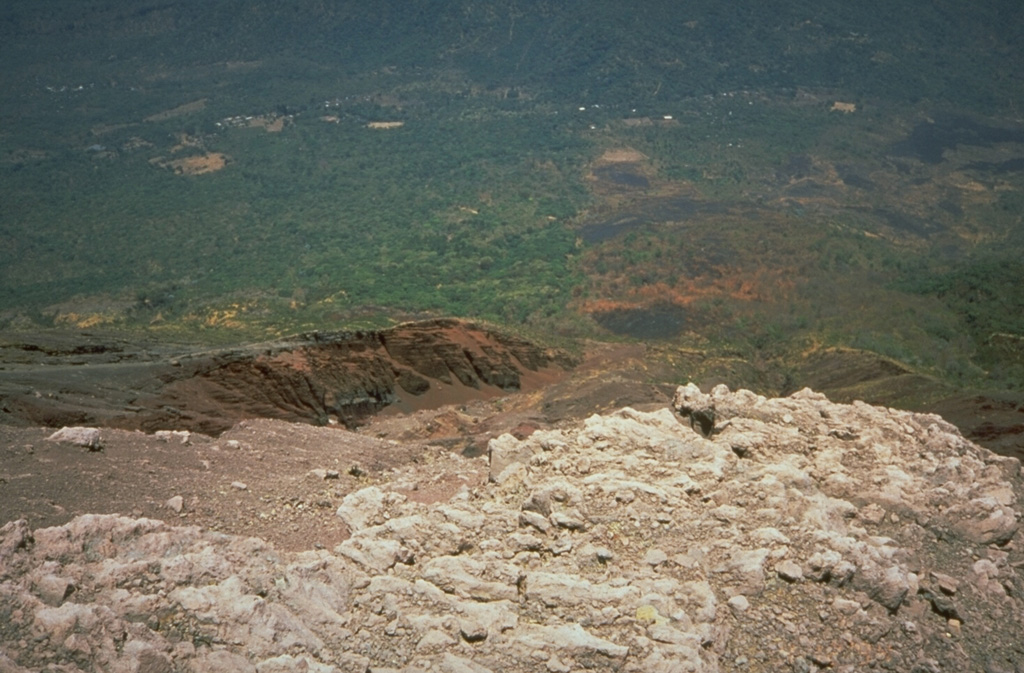
The fresh-looking lava flow at the upper right on the north flank of San Miguel volcano was emplaced during an eruption in 1844. The flow originated on July 25 from a NNW-flank fissure and traveled initially to the NNW before diverting to the NE and reaching to 8 km from the summit. After December the volcano began long-term explosive activity that lasted until 1848, when another lava flow occurred.
Photo by Kristal Dorion, 1994 (U.S. Geological Survey).
 This image is made available as a Public Domain Work, but proper attribution is appreciated.
San Miguel
