

Image GVP-06662
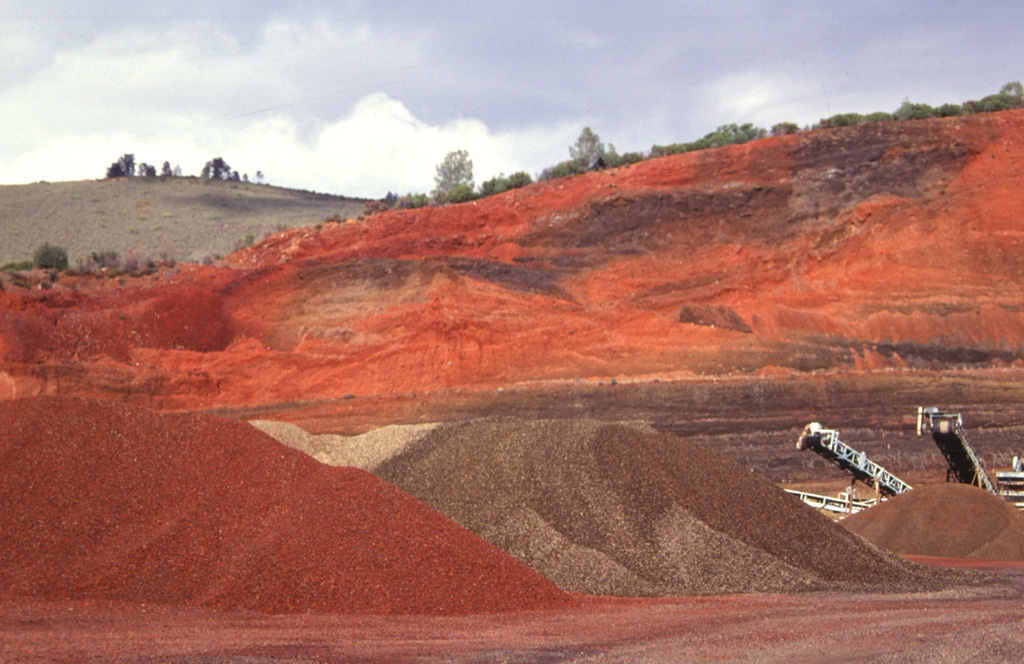
Brilliantly colored, bright-red oxidized scoria deposits from a cinder cone near the SE end of Clear Lake are quarried for road aggregate. The basaltic andesite cinder cone is one of a N-S-trending chain of young cones at the eastern margin of the Clear Lake volcanic field. This the northernmost of two quarried cinder cones bissected by the highway leading into the town of Clearlake Oaks.
Photo by Paul Kimberly, 1997 (Smithsonian Institution).
 This image is made available under the Public Domain Dedication CC0 license, but proper attribution is appreciated.
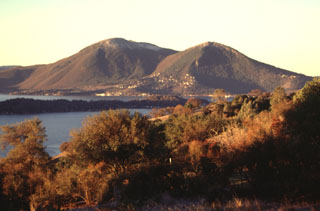
Clear Lake Volcanic Field
