

Global Volcanism Program | Image GVP-10384
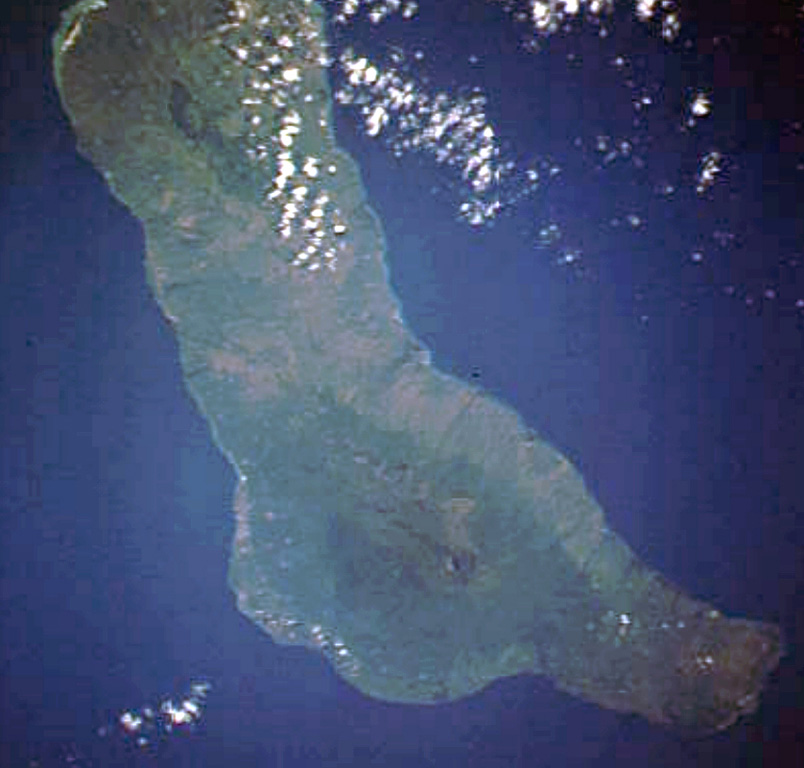
Grand Comore Island in the Indian Ocean NW of Madagascar is formed by two massive shield volcanoes. The more well-known and historically active Karthala volcano at the southern end of the island has a 3 x 4 km summit caldera. Elongated rift zones extend to the NNW and SE; the lower SE rift zone forms the Massif du Badjini, a peninsula at the SE tip of the island (bottom right). The Holocene La Grille volcano forms the northern part of the island. Youthful lava flows from both volcanoes have reached the coast.
NASA Space Shuttle image STS009-39-2516, 1983 (http://eol.jsc.nasa.gov/).
 This image is made available as a Public Domain Work, but proper attribution is appreciated.
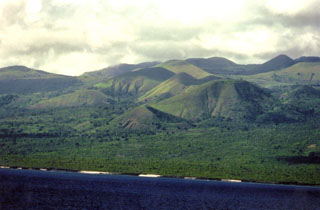
La Grille
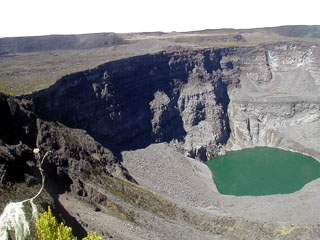
Karthala
