

Global Volcanism Program | Image GVP-05652
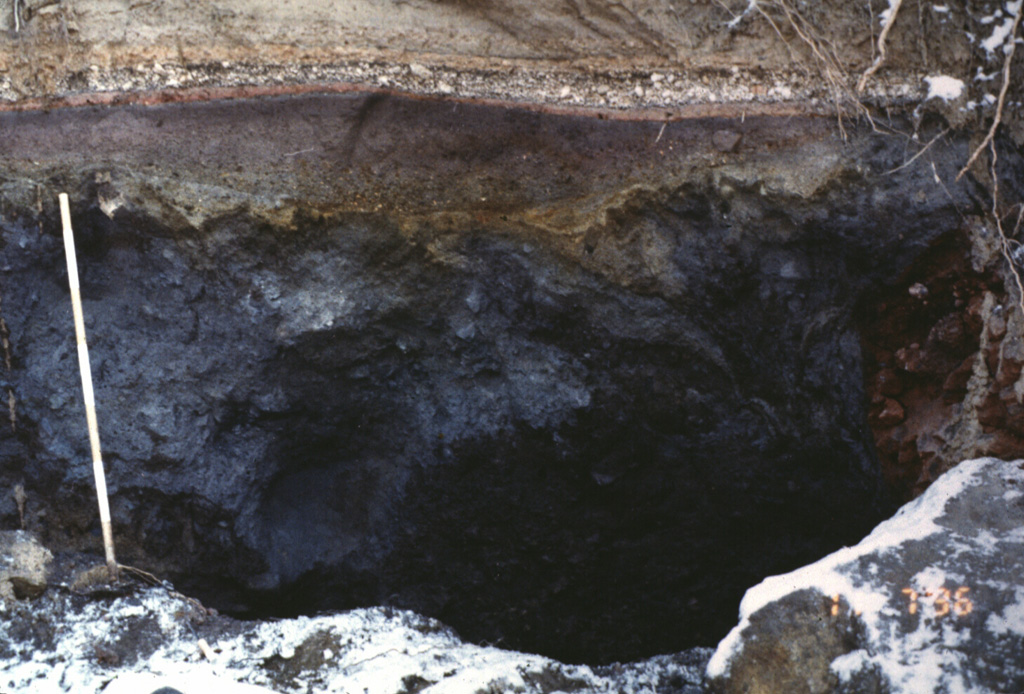
This outcrop, 5 km SW of the summit of Komagatake, shows a cross section of deposits from the 1640 eruption. The dark section at the base is a debris avalanche deposit produced by collapse of the summit. The reddish-gray section above the ruler is a blast deposit related to the collapse. The thin white unit above the blast deposit is a layer of airfall pumice, which is much thicker at other locations closer to the axis of tephra deposition. The top of the section is a pyroclastic flow deposit.
Photo by Mitsuhiro Yoshimoto, 1995 (Hokkaido University).
 This image is made available under the Creative Commons BY-NC-ND 4.0 license terms.
Galleries: Volcanic Outcrops
Keywords: stratigraphy | geology | field work | outcrop | debris avalanche deposit | pumice | tephra
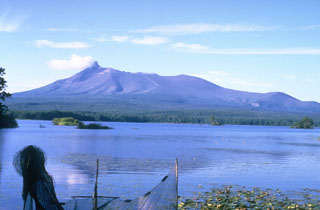
Hokkaido-Komagatake
