

Global Volcanism Program | Image GVP-06697
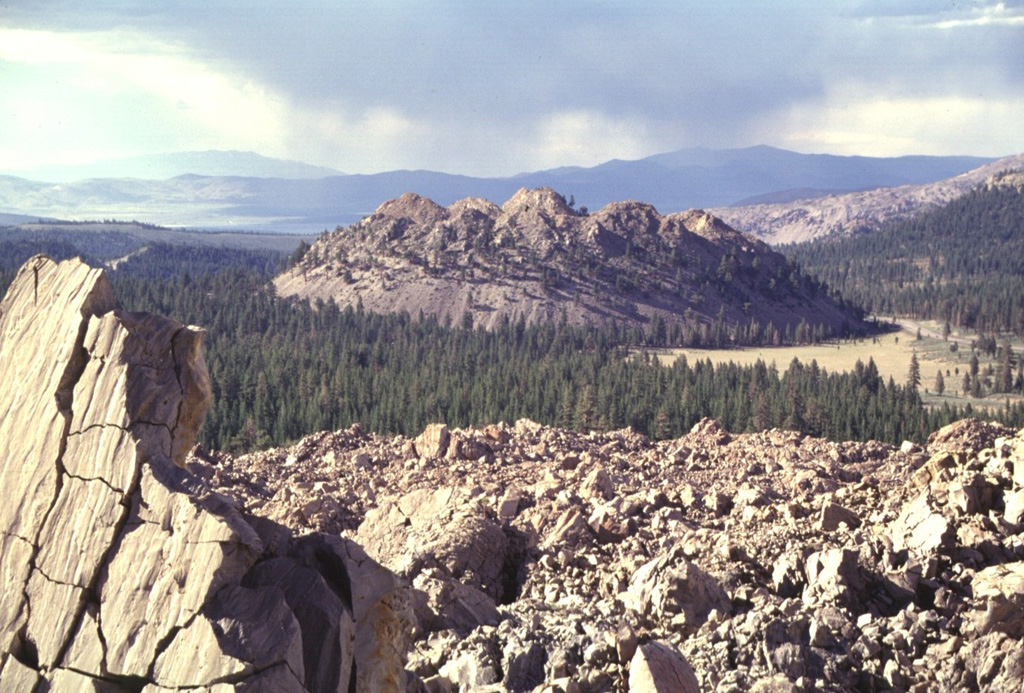
Wilson Butte, the northermost lava dome of the Inyo Craters, is seen from the Obsidian Flow lava dome to the south. The Inyo Craters are a 12-km-long chain of silicic lava domes, lava flows, and explosion craters along the eastern margin of Sierra Nevada south of Mono Craters near the town of Mammoth. Inyo Craters overtop the NW rim of the Pleistocene Long Valley caldera and extend onto the caldera floor, but are chemically and magmatically part of a different volcanic system. The latest eruptions at Inyo Craters took place about 600 years ago.
Photo by Lee Siebert, 1998 (Smithsonian Institution).
 This image is made available under the Public Domain Dedication CC0 license, but proper attribution is appreciated.
Mono-Inyo Craters