

Global Volcanism Program | Image GVP-08003
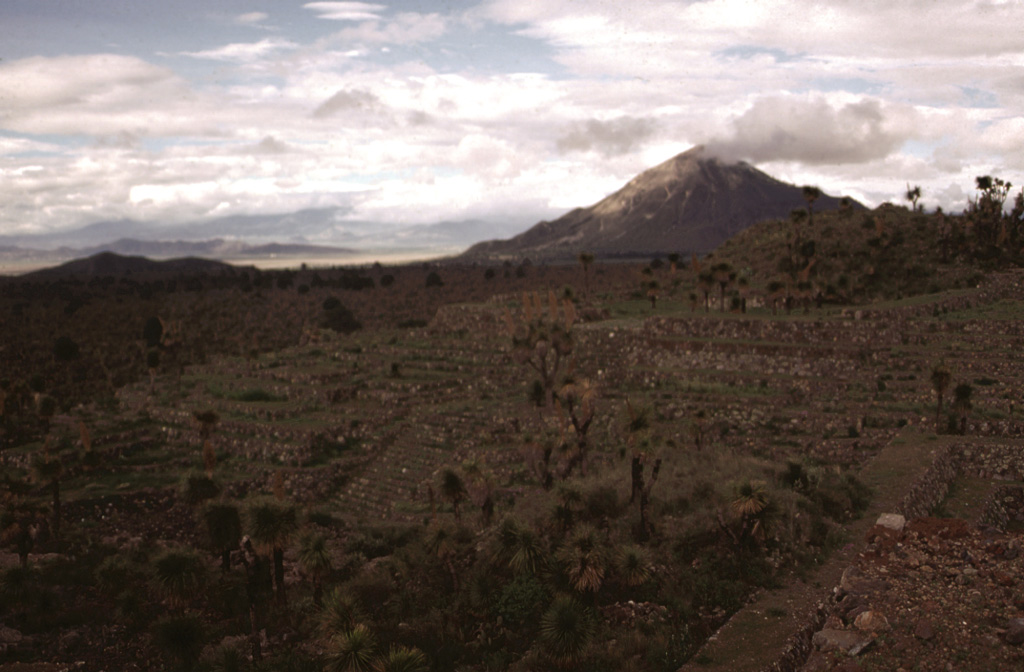
During the late-Pleistocene or Holocene, voluminous andesite and basaltic-andesite lava flows erupted from scoria cones on the southern caldera rim and flowed long distances down the flank. The age of the flows is not known precisely, but the roughly 6,000-year-old Cantona archaeological site in this photo was constructed on top of the flows. A meteorological cloud on the horizon drifts from the summit of Cerro Pizarro, the northernmost lava dome of the Serdán-Oriental volcanic field.
Photo by Gerardo Carrasco-Núñez, 1995 (Universidad Nacional Autónoma de México).
 This image is made available under the Creative Commons BY-NC 4.0 license terms.
Keywords: lava flow
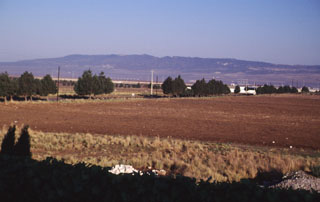
Los Humeros