
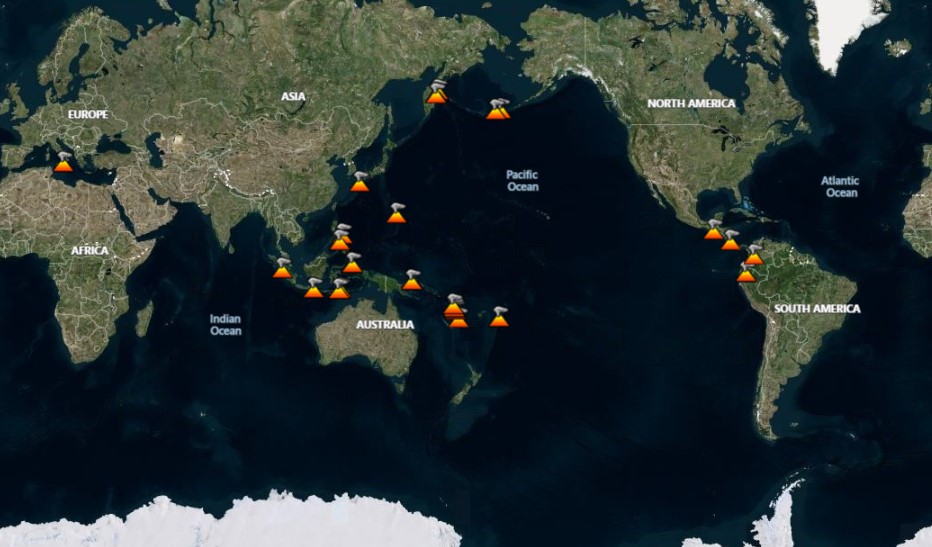
The Weekly Volcanic Activity Report is a cooperative project between the Smithsonian's Global Volcanism Program and the US Geological Survey's Volcano Hazards Program. Updated by 2300 UTC every Thursday (changed from Wednesdays starting in January 2026) and averaging 16 reported volcanoes, this is not a comprehensive list of all eruptions this week, but rather a summary of activity that meet criteria discussed in the "Criteria and Disclaimers" section below.
Volcanic activity reported here is preliminary and subject to change. Carefully reviewed, detailed narratives over longer time periods are published as reports of the Bulletin of the Global Volcanism Network available through volcano profile pages.
| Name | Country | Volcanic Region | Eruption Start Date | Report Type |
|---|---|---|---|---|
| Karymsky | Russia | Eastern Kamchatka Volcanic Arc | — | New Eruptive Activity |
| Kīlauea | United States | Hawaiian-Emperor Hotspot Volcano Group | 2024 Dec 23 | New Eruptive Activity |
| Krummel-Garbuna-Welcker | Papua New Guinea | Bismarck Volcanic Arc | — | New Eruptive Activity |
| Anatahan | United States | Mariana Volcanic Arc | — | Continuing Eruptive Activity |
| Fuego | Guatemala | Central America Volcanic Arc | 2002 Jan 4 | Continuing Eruptive Activity |
| Llaima | Chile | Southern Andean Volcanic Arc | — | Continuing Eruptive Activity |
| Rabaul | Papua New Guinea | Bismarck Volcanic Arc | — | Continuing Eruptive Activity |
| Sheveluch | Russia | Eastern Kamchatka Volcanic Arc | 1999 Aug 15 | Continuing Eruptive Activity |
| Soufrière Hills | United Kingdom | Lesser Antilles Volcanic Arc | — | Continuing Eruptive Activity |
| Suwanosejima | Japan | Ryukyu Volcanic Arc | 2004 Oct 23 | Continuing Eruptive Activity |
| Tungurahua | Ecuador | Northern Andean Volcanic Arc | — | Continuing Eruptive Activity |
Karymsky (Russia) | 19 March-25 March 2008 | New Eruptive Activity
|
|
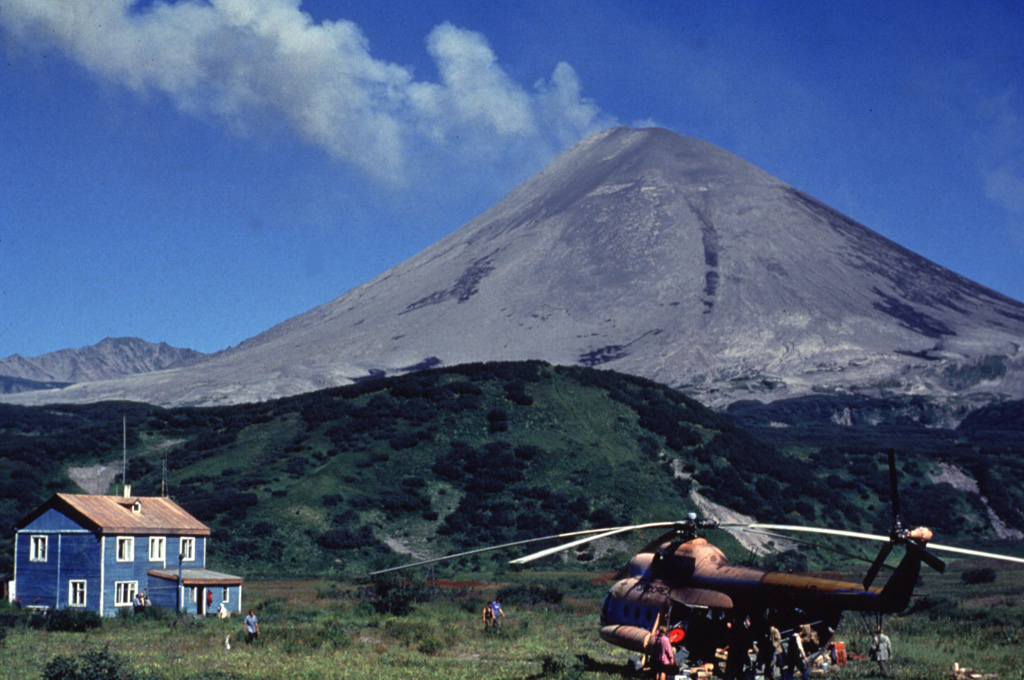 Karymsky KarymskyEastern Kamchatka Volcanic Arc |
KVERT reported that seismic activity at Karymsky was slightly above background levels during 13-16 March and at background levels during 17-19 March. Weak ash explosions or avalanches possibly occurred on 15 March when observations of satellite imagery revealed an ash plume drifting 40 km SE. On 16 March, ash deposits 15-20 km in length mantled the snow to the NE and ESE. The Level of Concern Color Code remained at Orange. |
Kīlauea (United States) | 19 March-25 March 2008 | New Eruptive Activity
|
|
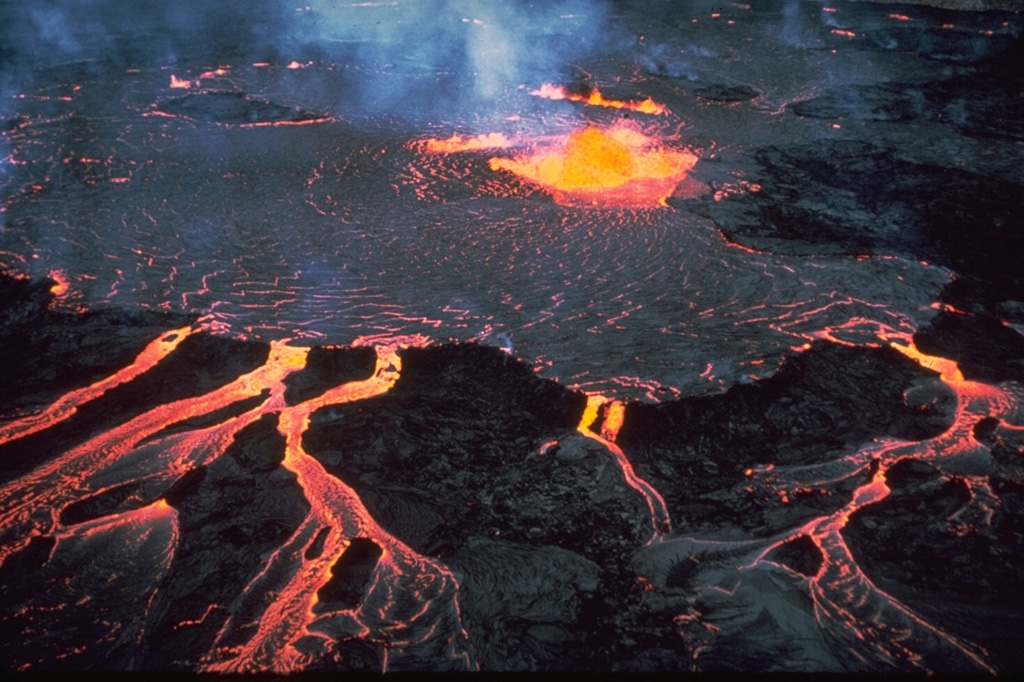 Kīlauea KīlaueaHawaiian-Emperor Hotspot Volcano Group |
Based on visual observations from HVO and National Park Service (NPS) crews as well as web camera views, HVO reported that during 19-25 March lava flow activity from Kīlauea's Thanksgiving Eve Breakout (TEB) shield was mostly concentrated in and near the Royal Gardens subdivision and at multiple points along the Waikupanaha and Ki ocean entries. Lava flows advanced eastward over an old sea cliff and onto the 1990 lava delta, and were 120 m W of the viewing area on 23 March. Flows through a kipuka produced fires during 18-22 March. Sources: Washington Volcanic Ash Advisory Center (VAAC), US Geological Survey Hawaiian Volcano Observatory (HVO) |
Krummel-Garbuna-Welcker (Papua New Guinea) | 19 March-25 March 2008 | New Eruptive Activity
|
|
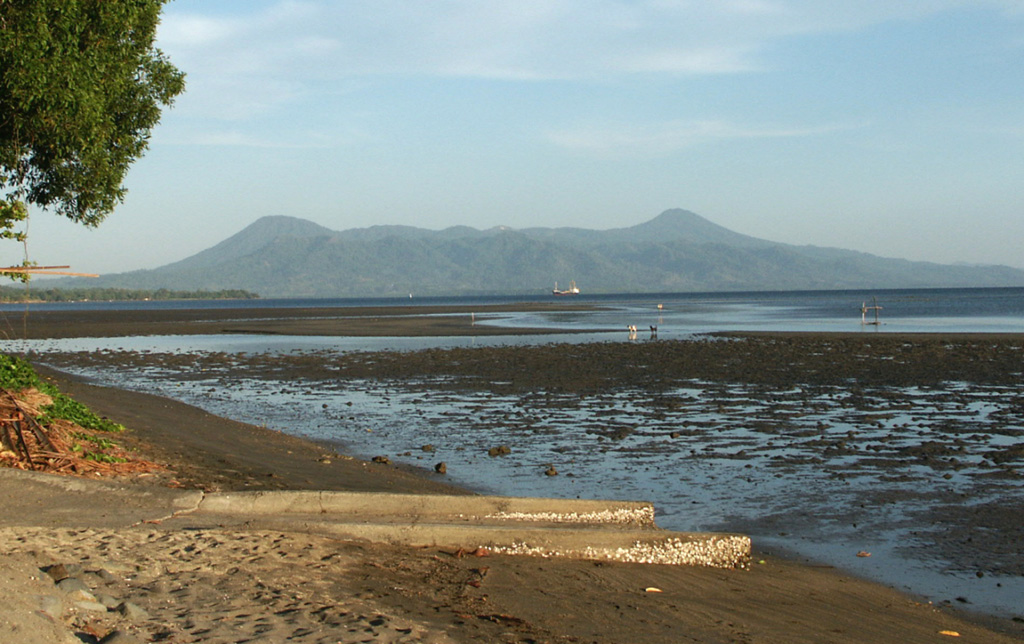 Krummel-Garbuna-Welcker Krummel-Garbuna-WelckerBismarck Volcanic Arc |
RVO reported that white plumes from two sources at the summit of Garbuna drifted SE during 19-21 March. Ashfall and a strong sulfur odor were reported in Kimbe Town (about 17 km SE) on 19 March. Source: Rabaul Volcano Observatory (RVO) |
Anatahan (United States) | 19 March-25 March 2008 | Continuing Eruptive Activity
|
|
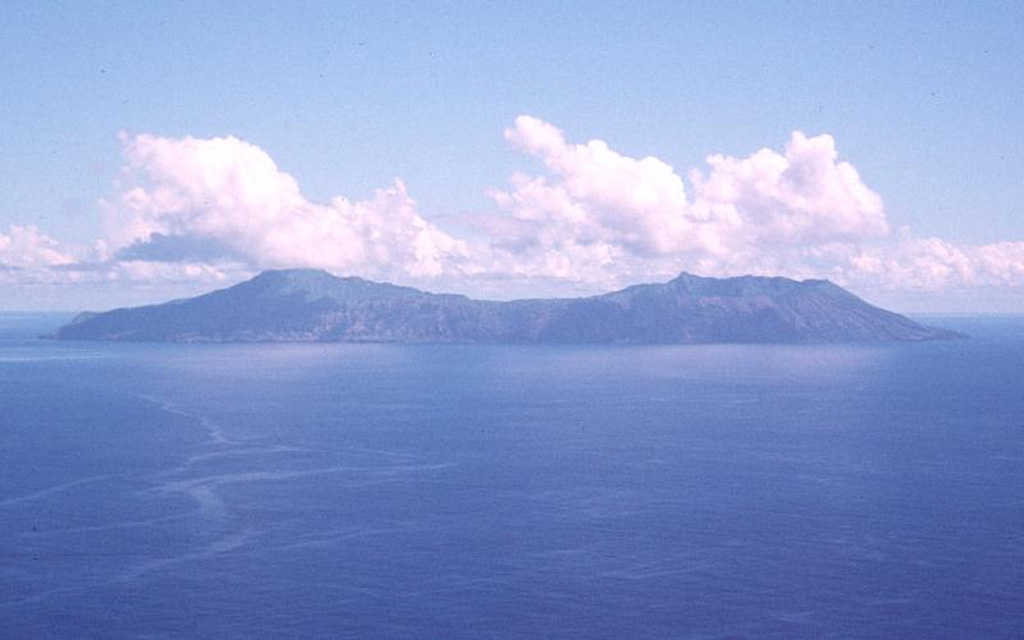 Anatahan AnatahanMariana Volcanic Arc |
The USGS reported that seismicity at Anatahan remained elevated during 19-25 March. Based on observations of satellite imagery, the Washington VAAC reported that diffuse gas-and-ash plumes drifted SW, NE, and E during 19-22 March. The Volcanic Alert Level remained at Watch and the Aviation Color Code remained at Orange. Sources: Washington Volcanic Ash Advisory Center (VAAC), Emergency Management Office of the Commonwealth of the Mariana Islands and United States Geological Survey Volcano Hazards Program |
Fuego (Guatemala) | 19 March-25 March 2008 | Continuing Eruptive Activity
|
|
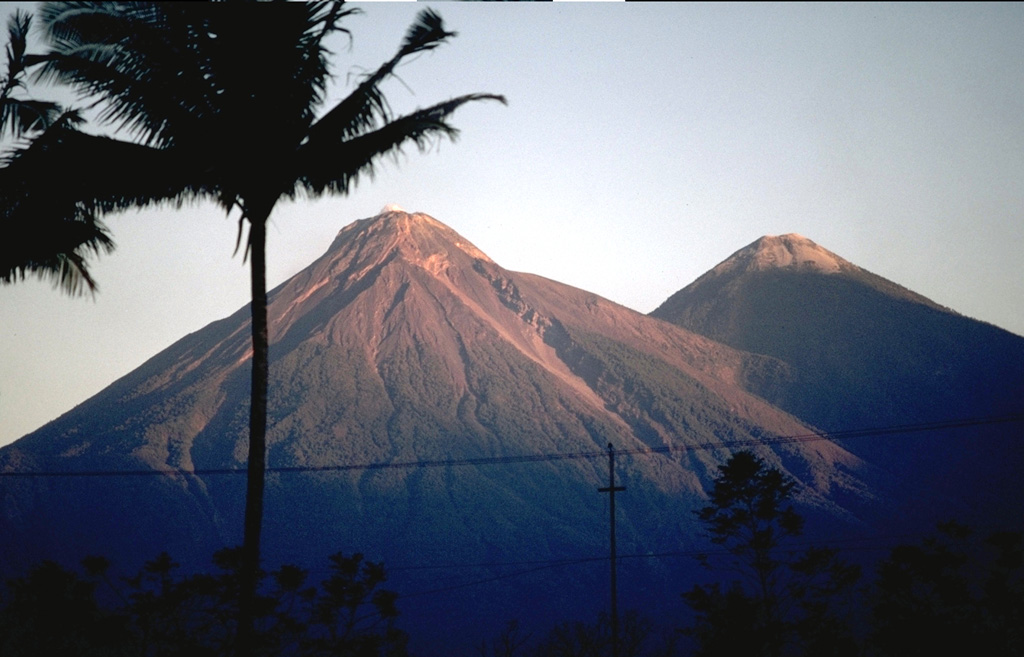 Fuego FuegoCentral America Volcanic Arc |
INSIVUMEH reported that during 22-25 March more frequent explosions (4-5 per hour) from Fuego produced ash plumes to altitudes of 4.1-4.6 km (13,500-15,100 ft) a.s.l. The plumes drifted 6-8 km S and SE. Most explosions produced degassing and rumbling noises, and shock waves that vibrated windows and ceilings within a 5-8 km radius. Source: Instituto Nacional de Sismologia, Vulcanologia, Meteorologia, e Hidrologia (INSIVUMEH) |
Llaima (Chile) | 19 March-25 March 2008 | Continuing Eruptive Activity
|
|
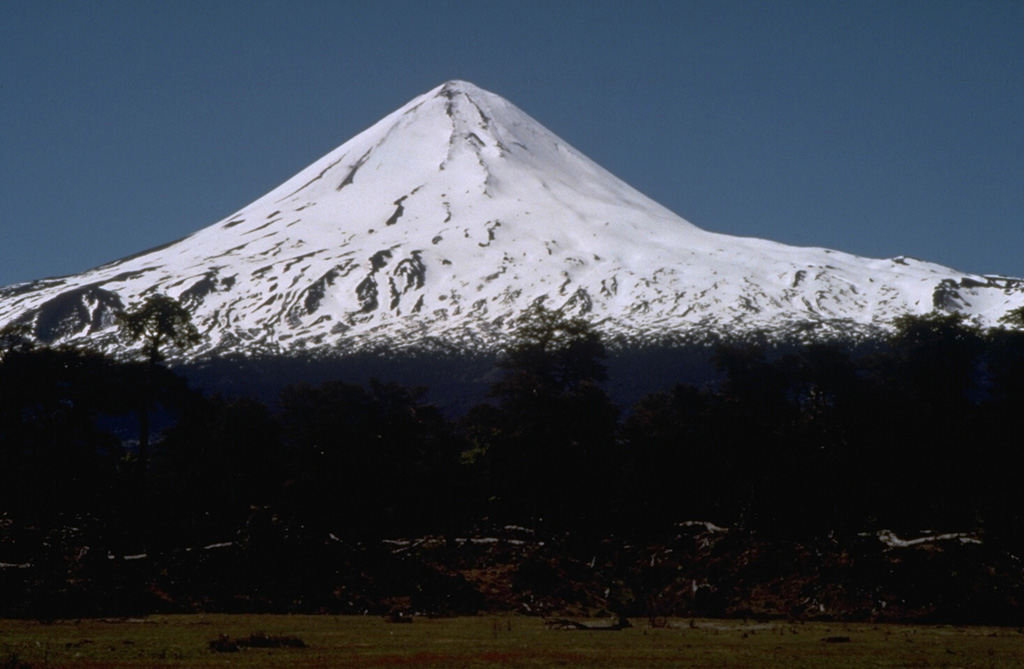 Llaima LlaimaSouthern Andean Volcanic Arc |
SERNAGEOMIN reported that fumarolic activity from the central pyroclastic cone in Llaima's main crater reactivated on 13 March and intensified during 15-17 March. Sulfur dioxide plumes rose to an altitude of 3.6 km (11,800 ft) a.s.l. and drifted E. People from nearby areas reported incandescence in the crater during 19-21 March. Incandescent material propelled from the crater was observed at night during 20-21 March. Source: Servicio Nacional de Geología y Minería (SERNAGEOMIN) |
Rabaul (Papua New Guinea) | 19 March-25 March 2008 | Continuing Eruptive Activity
|
|
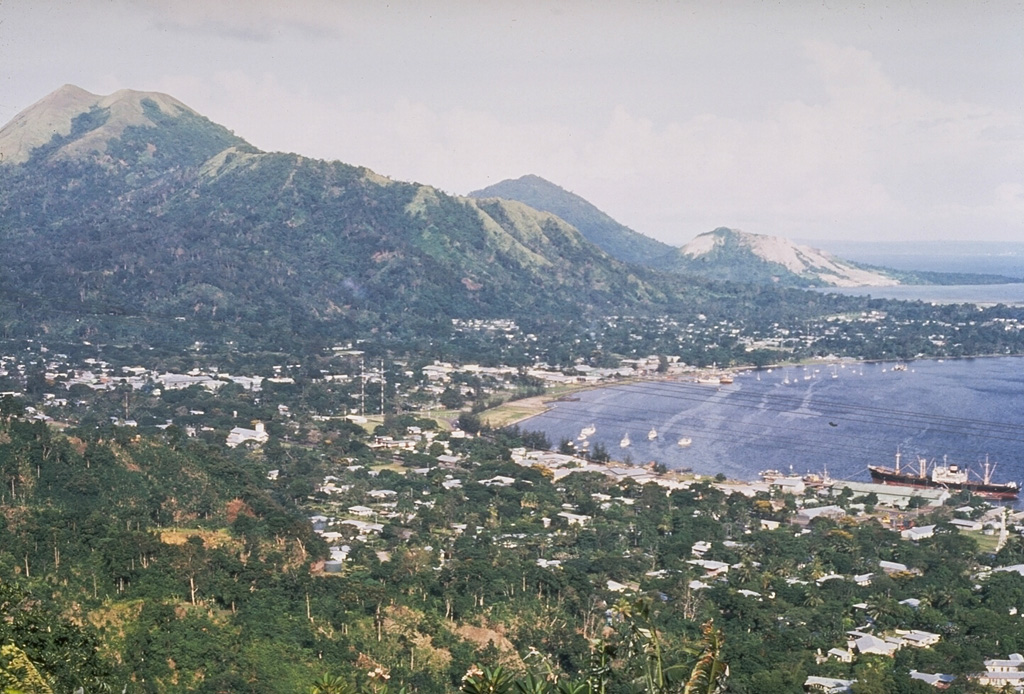 Rabaul RabaulBismarck Volcanic Arc |
RVO reported that ash plumes from Rabaul caldera's Tavurvur cone rose to altitudes of 1.7-3.2 km (5,600-10,500 ft) a.s.l. and drifted in almost all directions during 19-26 March. Ashfall was reported daily in areas downwind, including Rabaul Town (3-5 km NW), Matupit Island (2 km W), and Kokopo (20 km SE). Incandescence at the summit was observed and roaring noises were occasionally heard. An explosion produced lava fragments that showered the flanks on 20 March. Shockwaves rattled windows in Rabaul Town. Another explosion showered the flanks with lava fragments on 22 March. During 25-26 March, ashfall affected flights into Tokua (about 20 km SE of Rabaul). Source: Rabaul Volcano Observatory (RVO) |
Sheveluch (Russia) | 19 March-25 March 2008 | Continuing Eruptive Activity
|
|
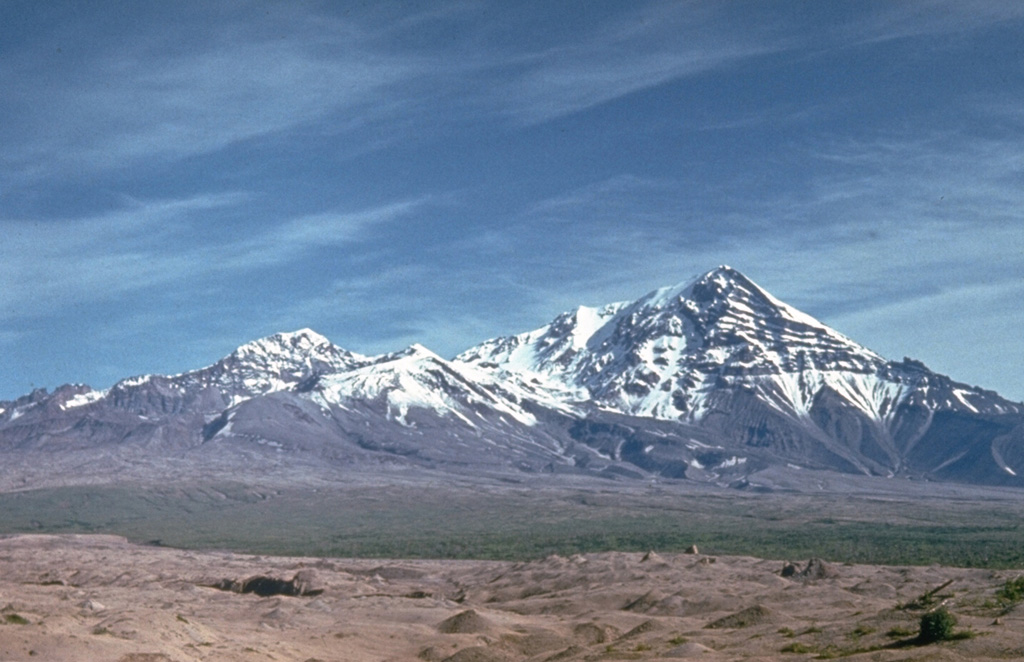 Sheveluch SheveluchEastern Kamchatka Volcanic Arc |
KVERT reported that seismic activity at Shiveluch was slightly above background levels during 14-21 March. Based on seismic interpretation, ash plumes possibly rose to an altitude of 3.5 km (11,200 ft) a.s.l. on 13 and 17 March. According to video footage and visual observations, an ash plume rose to an altitude of 4 km (12,800 ft) a.s.l. on 17 March and fumarolic activity from the lava dome was observed during 17 and 19-20 March. Observations of satellite imagery revealed that a gas plume drifted 17 km SW on 17 March and a thermal anomaly was present in the crater during the reporting period. The Level of Concern Color Code remained at Orange. |
Soufrière Hills (United Kingdom) | 19 March-25 March 2008 | Continuing Eruptive Activity
|
|
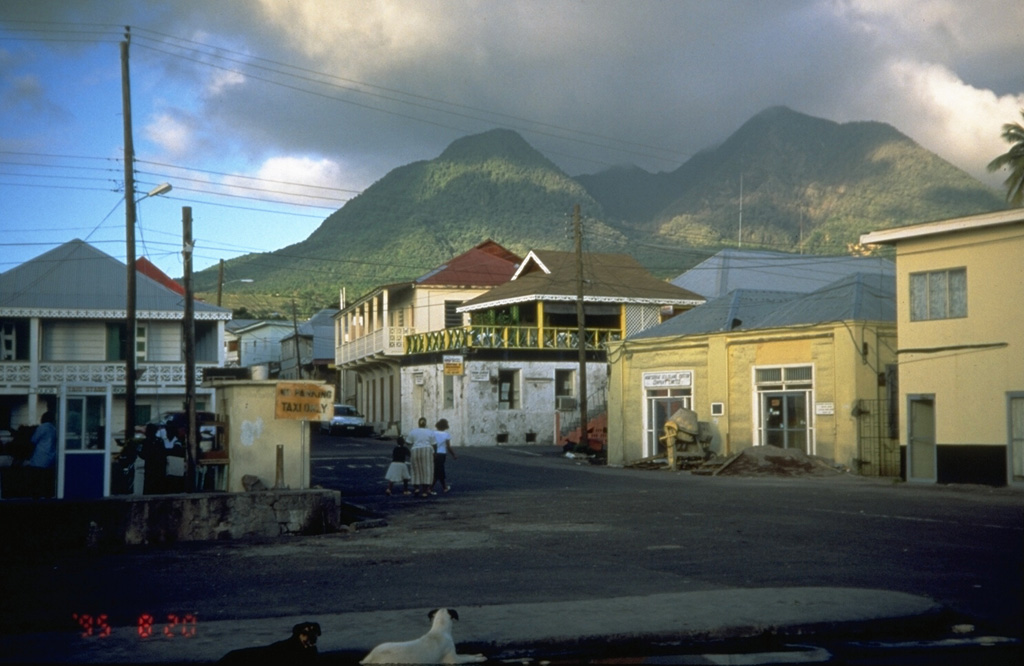 Soufrière Hills Soufrière HillsLesser Antilles Volcanic Arc |
MVO reported that that during 19-25 March the lava dome at Soufrière Hills changed very little, based on visual observations and other measurable parameters. Fumarolic activity was concentrated on the NW and SE flanks where abundant sulfur deposits were noted, and at the head of Gages Valley to the W. The Alert Level remained elevated at 4 (on a scale of 0-5). |
Suwanosejima (Japan) | 19 March-25 March 2008 | Continuing Eruptive Activity
|
|
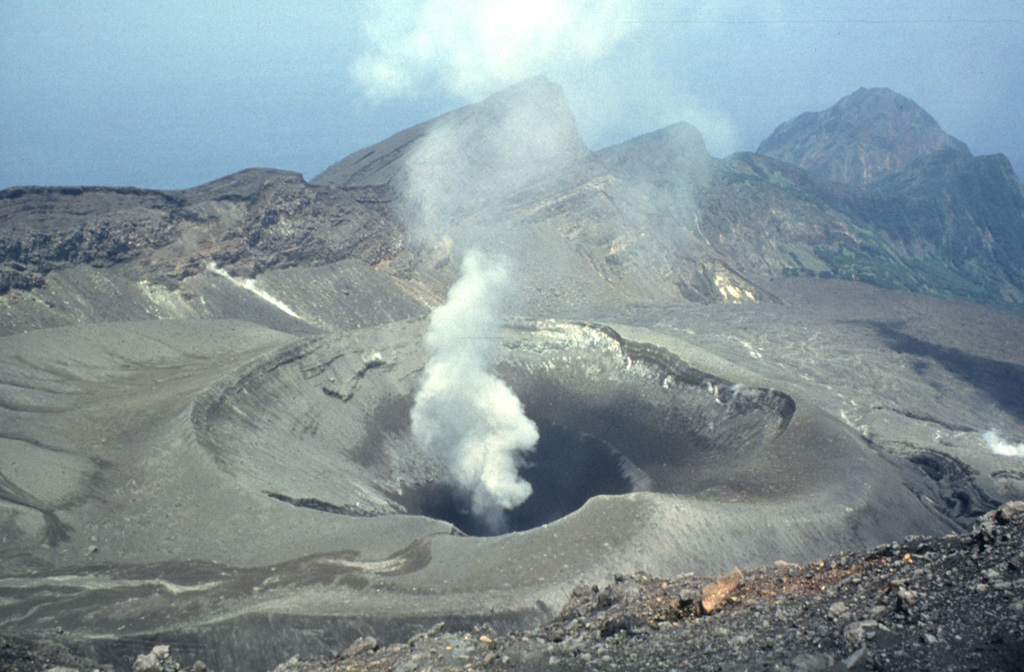 Suwanosejima SuwanosejimaRyukyu Volcanic Arc |
Based on information from JMA, the Tokyo VAAC reported that an explosion from Suwanose-jima occurred on 22 March. The altitude and direction of a possible resultant plume were not reported. |
Tungurahua (Ecuador) | 19 March-25 March 2008 | Continuing Eruptive Activity
|
|
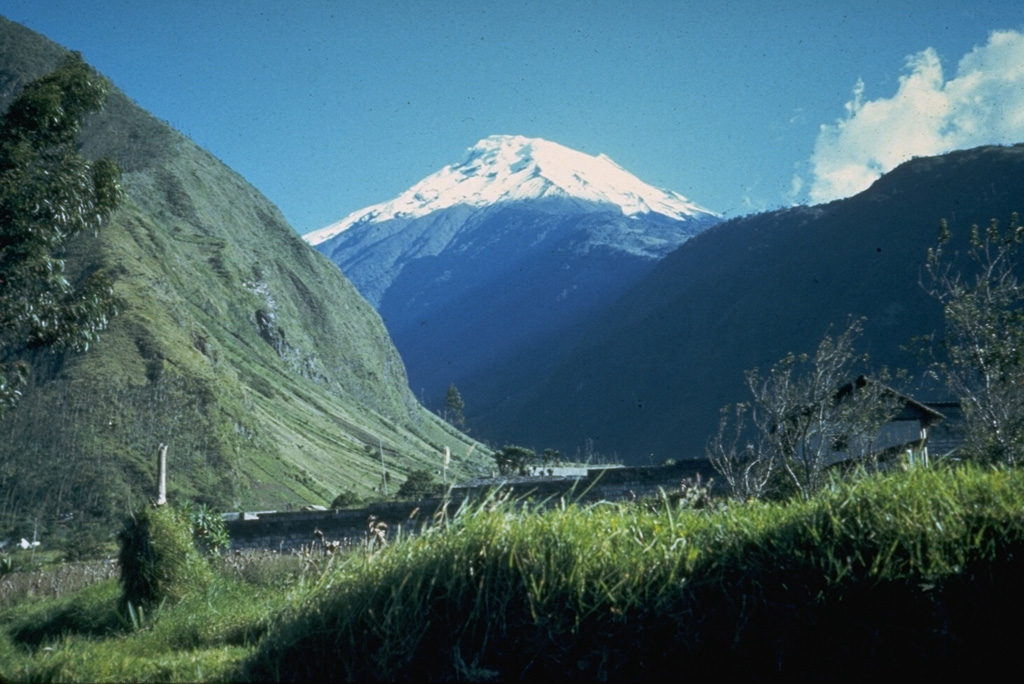 Tungurahua TungurahuaNorthern Andean Volcanic Arc |
IG reported that although visual observations were limited due to cloud cover, ash-and-steam plumes from Tungurahua were spotted and rose to altitudes of 5.5-8 km (18,000-26,200 ft) a.s.l. during 19-25 March. Ash plumes drifted S, SW, W, NNW, and NNE; ashfall was reported in areas downwind during 19-21 and 23-25 March. Roaring noises were reported on 23 March. During 24-25 March, small explosions were registered by the seismic network. Source: Instituto Geofísico-Escuela Politécnica Nacional (IG-EPN) |
Since the Weekly Volcanic Activity Report began in November 2000, there have been 22,882 individual reports over 1,336 weeks (average of 17 per week) on 351 different volcanoes.
Use the dropdowns to choose the year and week for archived Weekly Reports.
The RSS (Really Simple Syndication) feed is identical to the Weekly Volcanic Activity Report minus some features including the header information (latitude and longitude and summit elevation), the Geological Summary, and a link to the GVP volcano profile page. At the end of each report is a list of the sources used. Each report includes a link from the volcano's name back to the more complete information on the GVP website.
The CAP (Common Alerting Protocol) feeds are XML files specifically formatted for disaster management. They are similar in content to the RSS feed, but contain no active links.
Loading the network link into Google Earth will automatically load placemarks for volcanoes in the current weekly report. Placemark balloons include the volcano name, report date, report text, sources, and links back to the GVP volcano profile page and to the complete Weekly Report for that week.
 Download Smithsonian / USGS Weekly Volcanic Activity Report Network RSS Feed
Download Smithsonian / USGS Weekly Volcanic Activity Report Network CAP Feed
Download Smithsonian / USGS Weekly Volcanic Activity Report Network Link
The Weekly Volcanic Activity Report does not necessarily include all volcanic activity that occurred on Earth during the week. More than a dozen volcanoes globally have displayed essentially continuous eruptive activity for decades or longer, and such routine activity is typically not reported here. Submarine activity is reported when information is available. The Weekly Volcanic Activity Report summarizes volcanic activity that meets one or more of the following criteria:
- A volcano observatory raises or lowers the alert level at the volcano.
- A volcanic ash advisory has been released by a volcanic ash advisory center (VAAC) stating that an ash cloud has been produced from the volcano.
- A verifiable news report of new activity or a change in activity at the volcano has been issued.
- Observers have reported a significant change in volcanic activity. Such activity can include, but is not restricted to, pyroclastic flows, lahars, lava flows, dome collapse, or increased unrest.
Reports categorized as "Activity (New)" indicate eruptive activity that has occurred after at least 3 months of quiescence. Once a volcano is included in this section, updates will remain on that list unless the activity continues for more than 1 month without escalating, after which time updates will be listed in the "Activity (Continuing)" section. Reports are included in the "Unrest" sections (New or Continuing) if the volcano is undergoing non-eruptive activity such as seismicity or deformation that is unusually high for that volcano or is increasing. The "Other" category includes non-eruptive and non-unrest reports, such as Alert Level decreases or previous ash deposits resuspended by winds. Reports through 2025 were only divided into "New Activity/Unrest" and "Continuing Activity", which have been automatically converted to the "Activity (New)" and "Activity (Continuing)" groups, respectively, without a review of content that might change the category to "Unrest" or "Other".
It is important to note that volcanic activity meeting one or more of these criteria may occur during the week, but may not be included in the Weekly Volcanic Activity Report because we did not have the relevant information at the time.
1. The Weekly Volcanic Activity Report is intended to provide timely information about global volcanism on a weekly basis. Consequently, the report is generated rapidly by summarizing volcanic reports from various sources, with little time for fact checking. The accuracy of the Weekly Volcanic Activity Report is dependent upon the quality of the volcanic activity reports we receive. Reports published in the Bulletin of the Global Volcanism Network are cover longer time periods and are more carefully reviewed, although all of the volcanoes discussed in the Weekly Volcanic Activity Report are not necessarily reported in the Bulletin. Reports are updated on the Weekly Volcanic Activity Report web page as they are received, therefore information may be included regarding events that occurred before the current report period.
2. Rapidly developing events lead to coverage that is often fragmentary. Volcanoes, their eruptions, and their plumes and associated atmospheric effects are complex phenomena that may require months to years of data analysis in order to create a comprehensive summary and interpretation of events.
3. Preliminary accounts sometimes contain exaggerations and "false alarms," and accordingly, this report may include some events ultimately found to be erroneous or misleading.
4. Many news agencies do not archive the articles they post on the Internet, and therefore the links to some sources may not be active. To obtain information about the cited articles that are no longer available on the Internet contact the source.
5. USGS Disclaimer Statement for this Website:
Information presented on this website is considered public information and may be distributed or copied. Use of appropriate byline/photo/image credit is requested. We strongly recommend that USGS data be acquired directly from a USGS server and not through other sources that may change the data in some way. While USGS makes every effort to provide accurate and complete information, various data such as names, telephone numbers, etc. may change prior to updating. USGS welcomes suggestions on how to improve our home page and correct errors. USGS provides no warranty, expressed or implied, as to the accuracy, reliability or completeness of furnished data.
Some of the documents on this server may contain live references (or pointers) to information created and maintained by other organizations. Please note that USGS does not control and cannot guarantee the relevance, timeliness, or accuracy of these outside materials.
For site security purposes and to ensure that this service remains available to all users, this government computer system employs software programs to monitor network traffic to identify unauthorized attempts to upload or change information, or otherwise cause damage. Unauthorized attempts to upload information or change information on this website are strictly prohibited and may be punishable under the Computer Fraud and Abuse Act of 1986 and the National Information Infrastructure Protection Act. Information may also be used for authorized law enforcement investigations. (Last modified September 21, 1999.)
U.S. Department of the Interior, U.S. Geological Survey, Reston, VA, USA
URL: https://volcano.si.edu/reports_weekly.cfm

 Cite this Report